
Advanced Features 1
Large 2/3-inch X-Trans CMOS II Sensor
Featuring Fujifilm's bespoke pixel array, the FUJIFILM XQ1 captures high quality images with its large 2/3-inch X-Trans CMOS II sensor. And you'll be able to enjoy high-speed continuous photography and Full HD movie shooting thanks to the high performance CMOS element of the sensor.
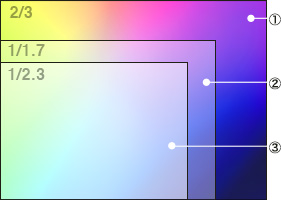
- 1: 2/3-inch 12M X-Trans CMOS II Sensor
- 2: 1/1.7-inch Image Sensor
- 3: 1/2.3-inch Image Sensor
OLPF-less architecture and 2/3-inch 12M X-Trans CMOS II sensor processing capture your world with crystal clarity.
Originally developed by Fujifilm for the FUJIFILM XQ1, the 2/3-inch X-Trans CMOS II sensor inherits the same architecture and features of the high performance sensor found in the acclaimed FUJIFILM X-Pro1 flagship model. Adoption of BSI (backside illumination) technology enables the successful incorporation of phase detection pixels into the array without affecting sensitivity performance- the key to FUJIFILM XQ1's high-speed AF.
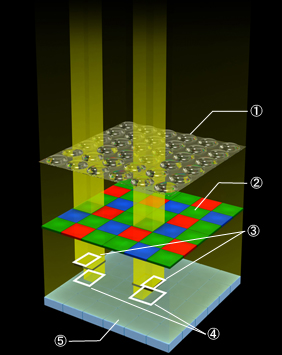
- 1: Microlenses
- 2: X-Trans Color Filter
- 3: L/R Light Interception Filter
- 4: Phase Detection Sensor / Green Filter Pixel
- 5: Photodiode
Advanced technology and processing help transfer the power of the lens into true to life photos.
X-Trans CMOS II adopts an original color filter array with a highly random pattern, eliminating the need for an optical low-pass filter (OLPF), which is used in conventional systems to inhibit moiré at the expense of resolution. This lets the sensor directly capture the high resolution performance of the FUJIFILM XQ1 lens. Also exploiting the enhanced performance of the EXR Processor II, Lens Modulation Optimizer (LMO) factors are calculated to compensate for aberrations and diffraction blur that occur when light passes through the lens and then are applied to produce images with amazing sharpness.
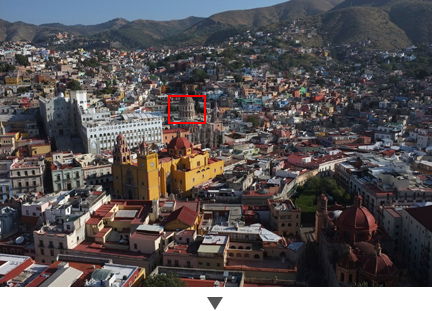

- Conventional Digital Camera
- New sensor (OLPF less) / New processor (LMO Processing)
- FUJIFILM XQ1
Fujinon lens with bright F1.8 aperture produces stunning pictures in low light
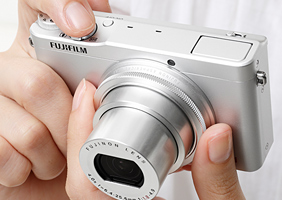

The bright F1.8 lens lets you capture quality pictures not normally possible with a compact camera. Noise is kept to a minimum without boosting sensitivity, while camera shake and subject motion are prevented due to high shutter speeds. And thanks to the large aperture, you can also create attractive "bokeh" blurred background effects.




Fujinon F1.8 lens: Compact size, superb quality
Featuring state-of-the-art technologies including aspherical elements and high refractive index glass, the FUJIFILM XQ1's lens boasts a fast F1.8 maximum aperture and a slim profile that would be virtually impossible with conventional lens designs. Another important feature is Optical Image Stabilization, which shifts one group of four elements to minimize camera shake without compromising resolution around the edges of the image, a common problem with conventional stabilization systems.
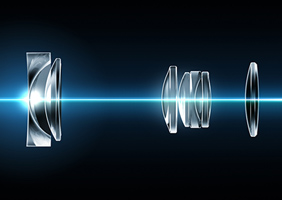
All glass 6 groups / 7 elements Configuration - 4 aspherical and 3 extra low dispersion lenses -
The slim-line lens achieves its aperture of F1.8 with a construction that features 7 lens elements in 6 groups (4 aspherical and 3 extra low dispersion lenses)
Lens Construction
By using 4 high-performance aspherical lenses, the FUJIFILM XQ1 delivers sharp image quality with rich resolution. These lenses also contribute to a more compact overall lens configuration.
- 1. Focal Plane
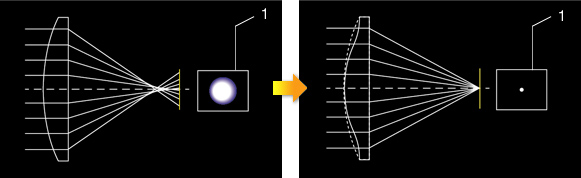
- Spherical Lens
- Aspherical Lens
3 ED lenses have been employed for their low dispersion and effective reduction of chromatic aberrations. By preventing color fringing and reducing contrast, the FUJIFILM XQ1 lens captures images with superb accuracy across the zoom range from wide angle to telephoto.
From wide angle to telephoto, and from the center of the image to the edges, the FUJIFILM XQ1's optical performance is designed to capture images with exceptional sharpness of detail and color fidelity in every scene.

- Conventional Digital Camera
- FUJIFILM XQ1
Image stabilizer (Lens shift type)
With its built-in 3.0-stop* optical (lens shift type) image stabilization function the FUJIFILM XQ1 will correct your image for any blurring that occurs when photographing moving objects. You will get a clear image without blurring in all kinds of scenes.
Intelligent Digital Zoom
Enlarging a subject at a distance
The 4x optical zoom and up to a max. of 16x zoom with intelligent digital zoom offer flexible telephoto photography equivalent to 400mm** at maximum.

- Wide Angle (25mm**)
- 4x Optical Zoom (100mm**)
- 4x Optical Zoom x 4x Intelligent Digital Zoom (400mm**)
High-Transmittance EBC
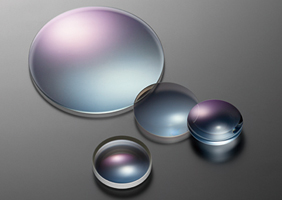
High Transmittance EBC (Electron Beam Coating) is FUJINON's unique wide-band technology developed for FUJINON broadcast-use lenses. The FUJIFILM XQ1 is the first compact camera to use the High Transmittance EBC for double sides of all glass lenses. Because highly refractive glass bends light rays more sharply than conventional optical glass, it creates greater potential for reflections which can cause ghosting and flare. HT-EBC technology effectively minimizes this stray light, assuring sharp, clear images under even the most demanding conditions.
Six-blade aperture diaphragm and 3cm macro
With a maximum aperture of F1.8 at the wide angle setting and a six-blade aperture diaphragm, the FUJIFILM XQ1's lens delivers beautiful defocused blur. Together with macro capabilities to within just 3cm of your subject, that means huge photographic potential in a highly compact body.

Notes
- · Sample photos are simulated images.
- * CIPA Standards
- ** 35mm format equivalent